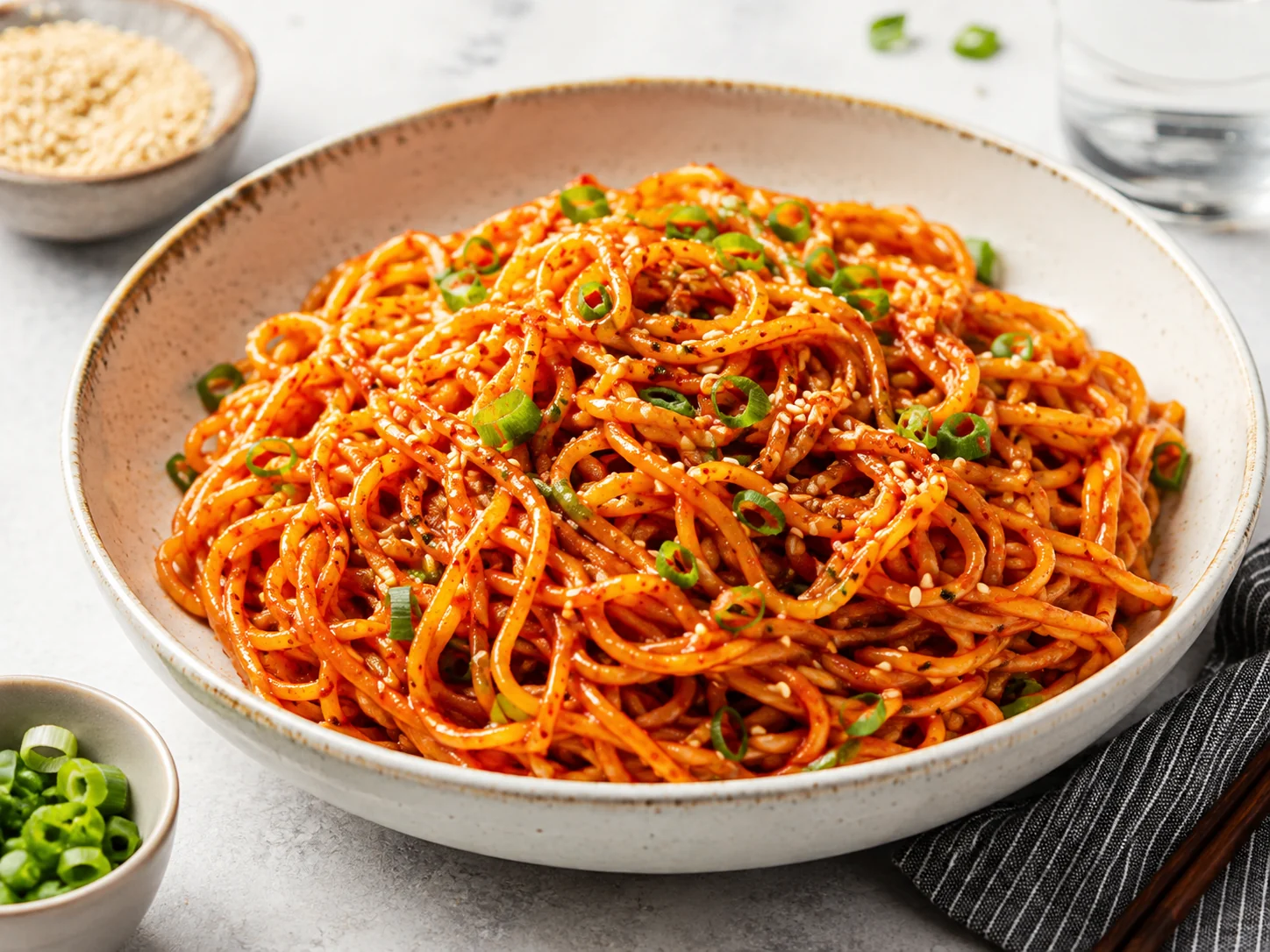
Easy Gochujang Noodles
Gochujang gives these noodles a deep chile flavor that is spicy, slightly sweet and fermented rather than simply hot. Soy sauce, rice vinegar and sesame oil round out the sauce, while a little noodle water helps it coat every strand without becoming too thick.
Mix the sauce before the noodles finish cooking so everything can come together quickly. Start with less gochujang if you are sensitive to heat, then add more after tasting.
Gochujang Noodles Need Heat, Sweetness, Acid and a Little Water
- Gochujang brings fermented chile depth, not just heat, so the sauce tastes fuller than a simple hot-sauce glaze.
- Soy sauce, rice vinegar, honey and sesame oil balance salt, acidity, sweetness and nuttiness.
- Reserved noodle water loosens the sauce and helps it turn glossy as it coats the noodles.
- Cabbage and carrot stay slightly crisp, giving the dish texture against the soft noodles.
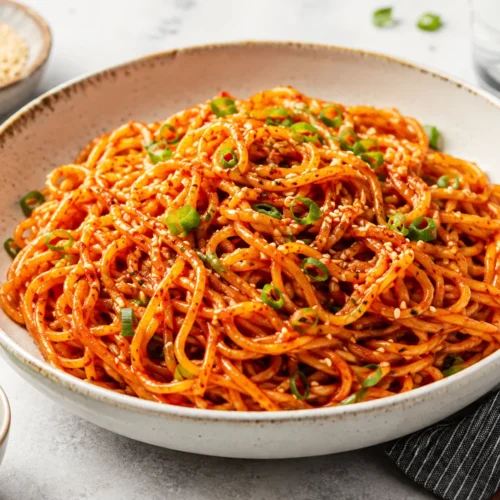
Easy Gochujang Noodles
Ingredients
- 10 oz noodles ramen, udon or spaghetti
- 2 tbsp gochujang
- 2 tbsp low-sodium soy sauce
- 1 tbsp rice vinegar
- 1 tbsp honey or brown sugar
- 1 tsp sesame oil
- 2 cloves garlic minced
- 1 tsp grated ginger
- 1 tbsp neutral oil
- 2 cups shredded cabbage
- 1 carrot shredded
- 1/3 cup reserved noodle water
- 2 green onions sliced
- 1 tbsp sesame seeds
Instructions
- Cook noodles according to package directions, reserving 1/3 cup cooking water.
- Whisk gochujang, soy sauce, rice vinegar, honey and sesame oil.
- Heat neutral oil in a large skillet and cook garlic, ginger, cabbage and carrot for 3–4 minutes.
- Add noodles, sauce and reserved water and toss over medium heat until glossy.
- Finish with green onions and sesame seeds.
Notes
Make the Sauce Before the Noodles Are Ready
Gochujang, soy sauce, rice vinegar, sweetener and sesame oil should be whisked together before the skillet gets busy. That way the noodles can go straight from draining into the pan without sitting and sticking.
Reserved Noodle Water Controls the Texture
Gochujang is thick, so the cooking water is what turns the sauce glossy enough to coat the noodles. Add it gradually; you can always use more, but you cannot take it back out.
Cook the Vegetables Fast
Cabbage and carrot only need a few minutes with garlic and ginger. Keeping a little bite in the vegetables gives the finished noodles texture instead of turning everything soft.
Adjust Gochujang Without Losing Balance
For less heat, reduce the gochujang slightly rather than removing the soy, vinegar or sweetener. Those other ingredients balance salt, acidity and sweetness and keep the sauce from tasting flat.