Cottage Cheese Scrambled Eggs – High Protein Breakfast
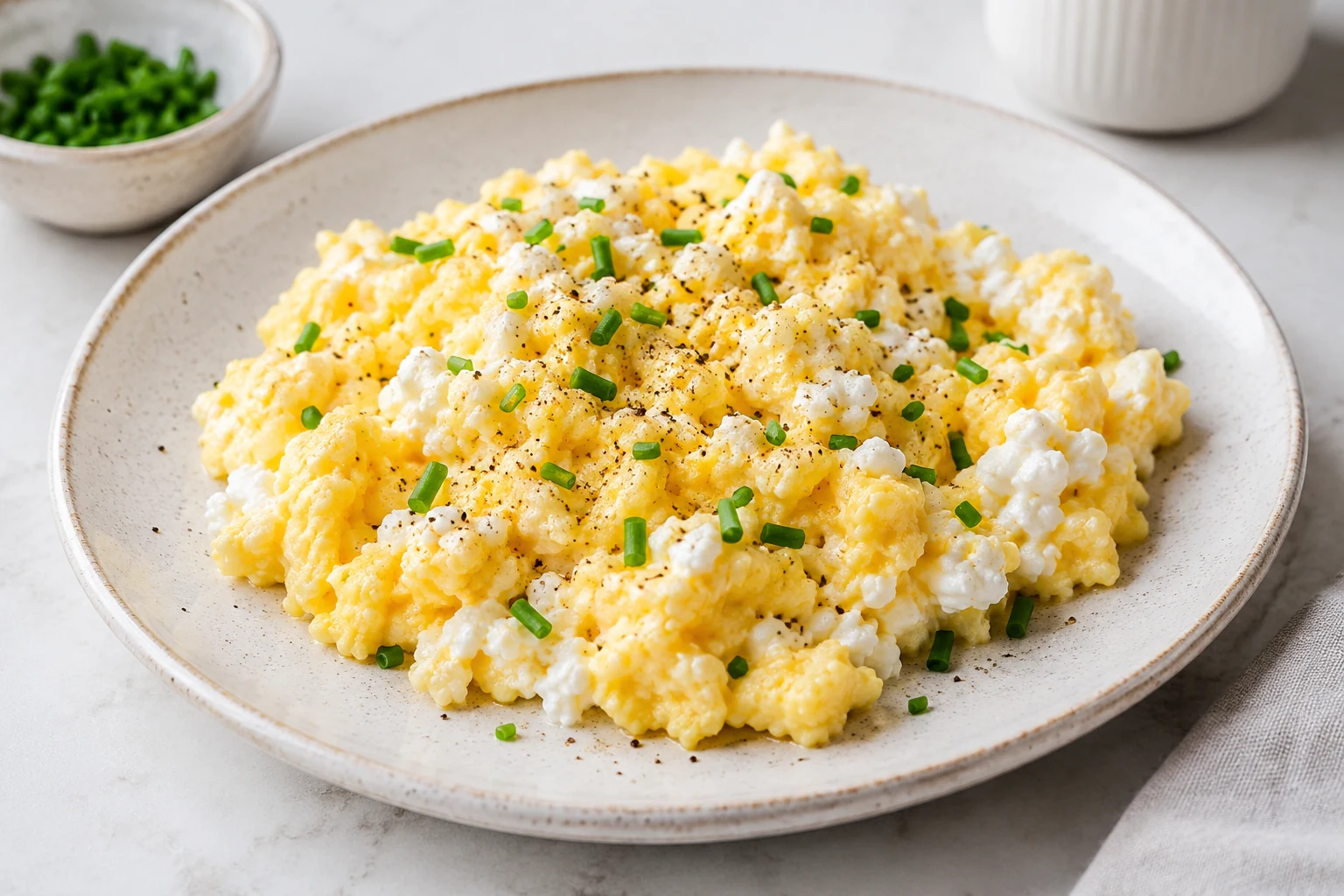
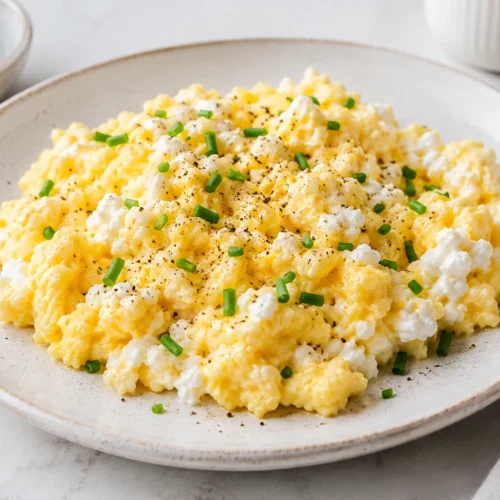
Cottage cheese may look lumpy going into the pan, but most of the curds soften into the eggs as they cook. The result is a richer, creamier scramble with more protein and a slightly tangy flavor that works particularly well with black pepper and herbs.
Moderate heat matters more than speed here. Cooking too aggressively can push moisture out of the cottage cheese and make the eggs watery, while gentler heat keeps the curds soft and tender.
Why Cottage Cheese Works in Scrambled Eggs
- Cottage cheese adds protein without protein powder or a separate side dish.
- The eggs stay soft and creamy when cooked over moderate heat.
- It takes only a few ingredients to make a more substantial breakfast.
- Fresh herbs, spinach or chili flakes can be folded in at the end.
Cottage Cheese Scrambled Eggs – High Protein Breakfast
Ingredients
- 4 large eggs
- 1/2 cup cottage cheese 110 g
- 1 tsp butter or olive oil
- 1/4 tsp salt
- Black pepper to taste
- Optional chives or spinach
Instructions
- Whisk eggs with cottage cheese, salt and pepper.
- Warm a nonstick skillet over medium-low heat and add butter or oil.
- Pour in the egg mixture and cook slowly, folding with a spatula until softly set.
- Add herbs or spinach during the final minute if using.
- Serve immediately.
Notes
Timing, Heat and Texture: The Useful Cues
- Use small-curd cottage cheese for a smoother texture.
- Cook over medium-low heat.
- Stop cooking when the eggs are just set because they continue to cook from residual heat.
- Season after tasting because cottage cheese can be salty.
The Meal Around Cottage Cheese Scrambled Eggs
- Whole-grain toast
- Tomatoes
- Avocado
- Fruit
- Breakfast potatoes
A Natural Next Recipe to Try
If you enjoyed this recipe, try one of these next:
- Easy Air Fryer French Toast Sticks
- High-Protein Overnight Oats Without Protein Powder
- High-Protein Egg Muffins for Meal Prep
If You Are Cooking Cottage Cheese Scrambled Eggs for Tomorrow Too
Egg dishes are best fresh. If storing, cool promptly, refrigerate and reheat until hot.
Why Cottage Cheese Changes Scrambled Eggs
Cottage cheese adds protein and moisture, but it also changes how quickly the eggs appear set. The curds can release a little whey as they warm, so medium-low heat works better than a very hot pan. High heat can tighten the eggs before the extra moisture has time to integrate.
For creamy eggs, control the pan temperature
Warm the skillet first, then reduce to medium-low before adding the egg mixture. Fold slowly with a spatula rather than stirring constantly. Remove the eggs from the heat when they are softly set; they will continue to firm for a short time from residual heat.
If the texture is too wet or too chunky
- Too wet: cook slightly longer over low heat rather than increasing the heat sharply.
- Large cottage cheese curds: blend or mash the cottage cheese before whisking it with the eggs.
- Watery spinach: add only a small amount and let excess moisture cook off.
- Rubbery eggs: lower the heat and stop cooking sooner on the next batch.
If you prefer a smoother texture, small-curd cottage cheese usually disappears into the eggs more easily than large-curd varieties. The final flavor should be savory and creamy rather than strongly “cheesy.”